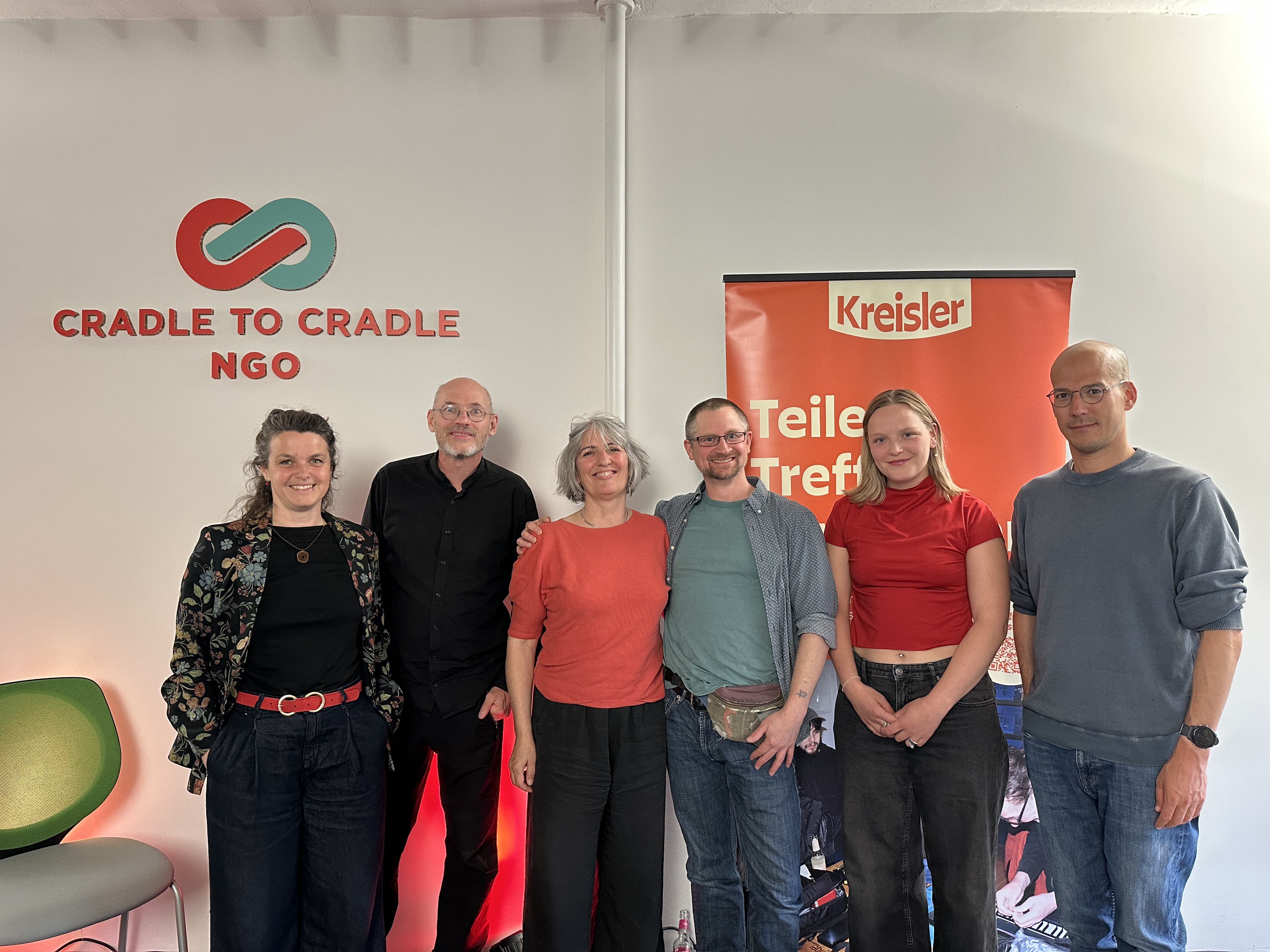
Utopian? Long overdue? After our panel discussion, the answer is clear: realistic—and necessary.
The Repair BONUS shows that while there is demand for repairs, a bonus alone is not enough to build the necessary infrastructure. If repairing, borrowing, and reusing are to become part of everyday life in Berlin, we need places, spaces, funding—and political action.
In conversation with Tom Hansing from the anstiftung and the Repair Roundtable, it became clear that Repair Cafés and open workshops have been doing important work for years; however, a circular basic service system for Berlin cannot rely solely on volunteer work. This requires solid socio-economic models and long-term cooperation between civil society, municipal actors, and commercial property owners.
We discussed with Linda Vierecke, Michael Efler, and Benedikt Lux what the SPD, The Left, and the Greens are promising in their campaign platforms—and what specifically needs to happen after the election. The big questions are: Who will provide the spaces? Who will provide long-term funding? And who will ensure that circular economy hubs don’t remain pilot projects but become part of the neighborhood’s infrastructure? Our conclusion: The tools are there; now we need the political will to implement them.
The panel featuring Paula Mikat and Cléo Mieulet from the Kreisler team can here on YouTube should be checked.
Thank you to all our guests, the Cradle to Cradle NGO for providing the space, and GLS Bank for its generous support.